Burn the Bridge
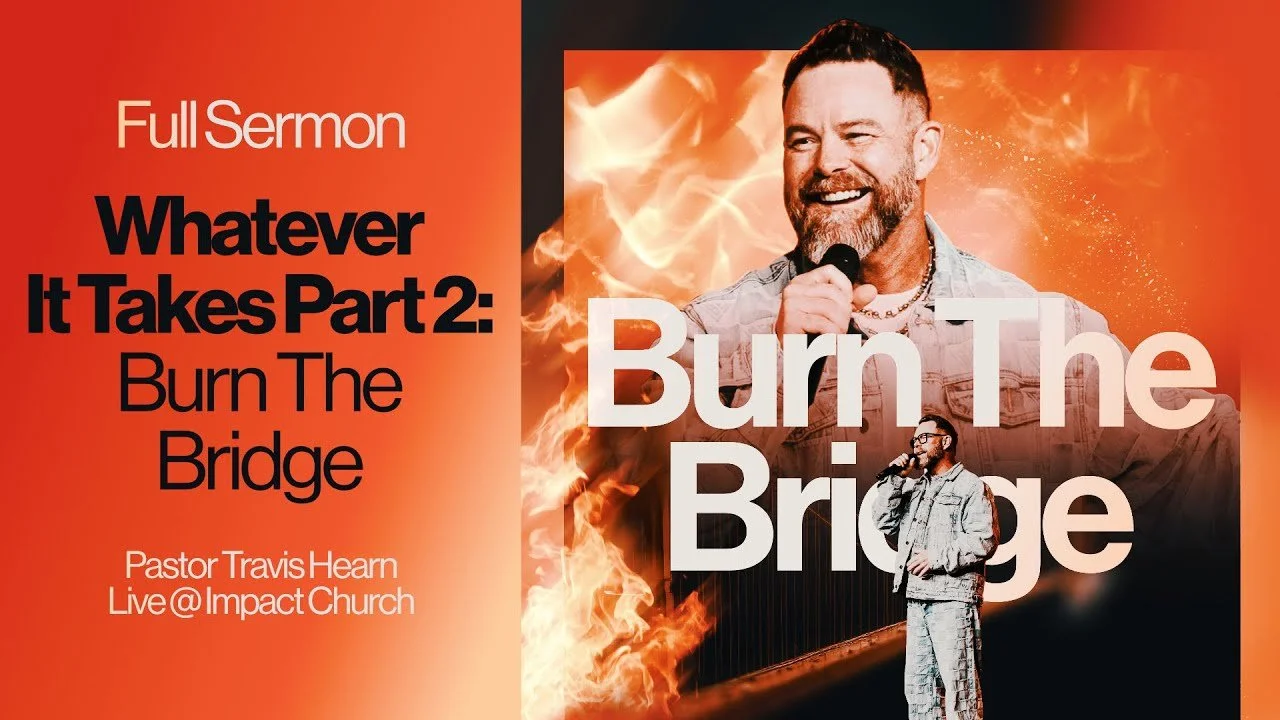
Burning the Bridge: How to Find Spiritual Freedom
Burning the bridge (in a spiritual sense) means permanently removing the option to return to a sinful lifestyle, negative habit, or toxic relationship. Based on the biblical principle found in Acts 19, this requires more than just an apology; it demands a public, decisive destruction of the "access points" that lead you back to your old life, ensuring that you can only move forward in your walk with Jesus Christ.
What does the Bible say about breaking old habits?
In the book of Acts, chapter 19, we find the biblical blueprint for true repentance. The scripture describes a group of believers in Ephesus who had been practicing sorcery. When they decided to follow Jesus, they didn't just whisper a quiet prayer or hide their past in a closet.
They brought their incantation books—worth several million dollars in today's value—and burned them at a public bonfire.
Pastor Travis Hearn emphasizes that these believers "didn't archive their past; they set their past on fire". They understood that freedom doesn't come from simply saying, "I'm sorry." Freedom comes from saying, "I'm done, and I am never going back".
How do I overcome temptation by removing access?
One of the primary reasons we fail to overcome temptation is that we rely on willpower instead of removing access. Pastor Travis calls this the "Access Bridge"—the people, places, and patterns that keep pulling you back.
In the sermon, Pastor Travis shares a personal story from when he was 17 years old. After giving his life to Christ, he went out into the Arizona desert with bags full of cassette tapes, beer bottles, and posters that represented his old life. He lit a bonfire and burned them all.
He didn't give them away; he destroyed them so they could never influence him or anyone else again. To get unstuck, you must be willing to look foolish to the world to secure your freedom.
Biblical Examples of Dealing with Access:
Joseph (Genesis): When tempted by Potiphar's wife, he didn't try to negotiate. He ran so fast he left his coat behind. As Pastor Travis notes, "Prison with purity is better than promotion with chains".
King David (2 Samuel): David fell into sin with Bathsheba because he remained in Jerusalem when he should have been at war. His idle access led to his downfall.
Samson (Judges): He lost his strength not overnight, but slowly, because he kept the "access bridge" open to Delilah, allowing his soul to be "strangled".
Why do I feel stuck in my past identity?
Even after we remove access to sin, we often struggle with the "Identity Bridge". This is the version of you that God has delivered, but you keep protecting. You might say, "I've always been anxious," or "I'm just broken."
Pastor Travis Hearn uses a powerful illustration of a baby elephant to explain this mental bondage. When an elephant is young, it is tied to a stake with a heavy chain and learns it cannot break free. When it becomes a massive, powerful adult, it can be held by a flimsy rope because it has been "brainwashed into bondage".
Table: Identity in Christ vs. Past Failures
The Old Identity,The New Identity in Christ,Biblical Example
"""I am the least of my family.""","""You are a Mighty Warrior.""","Gideon (Judges 6)"
"""I am a persecutor and murderer.""","""I am a Minister of the Gospel.""","Apostle Paul (Acts 9)"
"""I am defined by my divorce/addiction.""","""The old is gone, the new is here.""",2 Corinthians 5:17 22
What is the "Security Bridge" and why is it dangerous?
The third bridge we must burn is the "Security Bridge". This is the backup plan we keep "just in case" God doesn't come through the way we want Him to.
It might be a secret bank account, a toxic relationship you won't cut off, or a coping mechanism. The problem is that "partial trust always produces partial obedience".
We see this in the story of Abraham and Isaac. God asked Abraham to sacrifice his son—the very promise he had waited 25 years for. Abraham didn't argue; he obeyed immediately. It was only after Abraham surrendered what he loved that God provided the ram in the thicket.
The Lesson: Supernatural provision shows up after the bridge is burned, not before.
Finding a Fresh Start When You're Ready for One
There is a moment, and most people know it when it comes, when the weight of what you have been carrying finally feels heavier than the fear of letting it go. That moment is not about where you live or what you have done. It is about what you are willing to walk toward. If you are somewhere in the Phoenix Valley and looking for a community that takes that moment seriously, Impact Church is in Scottsdale, with campuses serving North Scottsdale, South Scottsdale, and the wider Valley, including Tempe, Chandler, Gilbert, and Paradise Valley. We believe you are not who you used to be. You are not what happened to you. You are what Jesus did for you. If you are ready to find out what that looks like in real life, we would love to be part of that journey.
Frequently Asked Questions
-
Spiritually, burning a bridge means permanently destroying the path back to a sinful lifestyle or old identity. It is based on Acts 19, where believers publicly burned their expensive sorcery scrolls to declare they had "crossed the line" and would never return to their old ways.
-
Pastor Travis Hearn teaches that willpower is not enough; you must remove "Access." If you struggle with lust, remove the apps. If you struggle with alcohol, stop going to the bar. As Jesus metaphorically taught, if your hand causes you to sin, "cut it off"—meaning, ruthlessly remove the access point.
-
Impact Church, located in Scottsdale, offers a supportive community for those ready to leave their past behind. Through the "Whatever It Takes" series and weekly community groups, families can find the biblical tools to break generational curses and find freedom 32.
Leave us a comment to share your favorite takeaway from the sermon and be sure to share the message with someone you care about.
To support this ministry and help us continue to reach people all around the world, please visit our Giving page.