I Am Not My Wounds
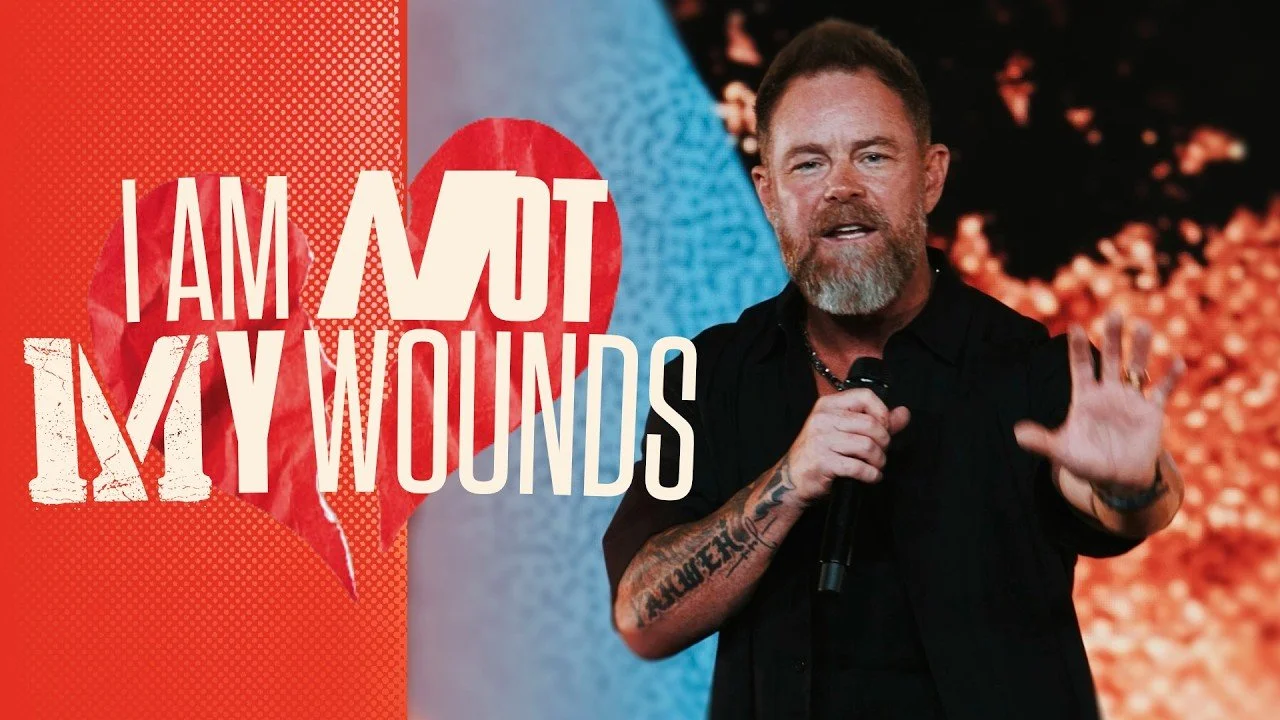
Identity in Christ: How Emotional Healing Truly Begins Today
If you have ever caught yourself saying "I'm divorced" instead of "I went through a divorce," you already know what it feels like to lose your identity in Christ to a wound. Emotional healing does not begin with fixing your circumstances. It begins with letting God answer a deeper question: who does He say you actually are?
Pastor Travis Hearn opened the new series "My Wounds Won't Win" by naming something many people carry quietly into church, a wound so old it has started to feel like a name instead of a memory. That is exactly where real emotional healing has to start.
This post walks through that first message, built around a man who waited thirty-eight years beside a healing pool in John chapter 5. His condition became his identity long before Jesus ever arrived, and the same thing can happen to any of us. Whatever wound you carry, it was never meant to replace your identity in Christ.
How Does Healing Emotional Wounds Spiritually Begin With a New Identity?
Healing emotional wounds spiritually starts with a truth most people never stop to consider: the labels we carry are rarely the labels God gave us. In John chapter 5, Jesus walked past a crowd of broken people at the pool of Bethesda and went straight to one man who had been unable to walk for thirty-eight years. John never records the man's name; he is only ever called "the invalid," identified by his condition rather than his character.
That detail matters, because it shows what happens when healing emotional wounds spiritually gets neglected long enough. A condition quietly becomes a name, and a person's true identity in Christ gets buried underneath it, which is exactly why emotional healing has to start with identity rather than circumstances. Pastor Travis Hearn pointed out that Jesus never once called the man by his ailment; other people did that, culture did that, and thirty-eight years of disappointment did that.
Jesus called him toward something else entirely, a future the man could not yet see for himself. That is what healing emotional wounds spiritually actually requires: someone speaking a truer name over you than the one your pain has been repeating for years.
Here is one honest step you can take today. Write down the name your wound has given you, whether it is "rejected" or "not enough," and then write next to it what scripture says is actually true.
What Does It Mean to Stop Letting Wounds Win?
To stop letting wounds win, you first have to notice how long you have been building your life around a wound instead of a calling. The man in John 5 had spent thirty-eight years arranging his routines and relationships around his condition. When Jesus asked him directly, "Do you want to get well?" the man answered from his past instead of his future, listing every reason healing had never worked before.
Pastor Travis Hearn called this out plainly: wounded people often become experts at explaining why nothing can ever change. That is exactly how a wound quietly takes over a person's identity in Christ without anyone noticing.
This is exactly how many of us stop letting wounds win in theory but keep losing the fight in daily life. We stop expecting healing and start managing pain instead. A parent might snap at their kids because of an old wound from childhood, or a spouse might brace for betrayal because of a relationship that ended years ago.
None of that means those wounds are stronger than grace. It means the wound has been allowed to narrate the story for far too long, and choosing to stop letting wounds win starts with letting a different voice speak.
One honest step you can take today is to notice the next moment you react from pain rather than peace, and pause long enough to ask whether the wound or the truth is talking.
How Do Wounds Become Your Testimony Instead of Your Identity?
Wounds becoming your testimony is not about pretending the past never happened. Pastor Travis Hearn made a careful distinction here: Jesus told the healed man to pick up his mat, the very thing that had represented thirty-eight years of pain and forgotten prayers. He did not tell him to erase the memory.
He told him to carry it, because now the mat was proof of what God had done rather than a record of what life had done to him. It became evidence of a restored identity in Christ instead of a symbol of everything that had gone wrong.
That is the real difference between a wound as an identity and wounds becoming your testimony. Before healing, the wound carries you. After healing, you carry the wound like evidence instead of a life sentence.
Someone's divorce does not have to remain their identity; it can become the story of how God rebuilt a life that once felt unrepairable. Someone's addiction does not have to define them forever; wounds becoming your testimony means it can become the account of the exact moment grace interrupted an unbreakable pattern, and emotional healing became the new normal.
The turning point is not simply getting through pain. It is agreeing with a new name instead of the one the wound handed you.
One honest step you can take today is to speak your story out loud to someone you trust, on purpose, as a testimony rather than a confession you are ashamed of. That single shift in language is often where wounds becoming your testimony actually begins.
What Does John 5 Teach Us About Identity in Christ and Healing?
John chapter 5 tells the story of a man who had been an invalid for thirty-eight years, lying beside a pool known for healing while everyone else moved forward with life. When Jesus saw him lying there and learned that he had been in this condition for a long time, Jesus asked him, "Do you want to get well?" (John 5:6). His short exchange with Jesus reveals three truths that anchor this message about identity in Christ.
1. Jesus Gives a New Identity
What Happened: Jesus never referred to the man by his condition, even though everyone else around the pool did.
Why It Matters: God speaks to who you are becoming, not only to what has happened to you.
2. Jesus Invites Us to Leave the Old Identity
What Happened: Jesus asked a question that went far deeper than physical healing, inviting the man to imagine a life apart from the identity he had built for thirty-eight years.
Why It Matters: Real change starts with being willing to imagine something different than what has always been true.
3. Jesus Calls Us to Walk in the New Identity
What Happened: Jesus told the man to get up, pick up his mat, and walk, turning the very thing that once held him captive into proof of God's work.
Why It Matters: Healing is not only relief from pain; it is learning to carry your story differently.
Finding Healing Close to Home Across the Valley
Carrying a wound quietly for years can make a person feel isolated, but that kind of loneliness rarely has anything to do with geography; it has everything to do with feeling unseen. If you are ready to be seen and supported rather than simply survive another week, Impact Church meets in person right here in Maricopa County, with neighbors gathering from North Scottsdale to South Scottsdale, and from Paradise Valley across to Tempe, Chandler, and Gilbert. Wherever you are in the Phoenix Valley, there is a seat near you this Sunday, with no pressure to have it all figured out before you walk through the door.
Your Wounds Don't Get the Final Word
For thirty-eight years, one man was known only by his condition, until Jesus gave him a new name instead of a new diagnosis. Pastor Travis Hearn's message was simple: your wound is not your identity in Christ, it is meant to become your testimony through real emotional healing.
When you are ready to experience this in person and meet the community behind this message, plan your visit here for a Sunday at one of our Scottsdale campuses.
Frequently Asked Questions
-
Start by noticing which labels you use for yourself that came from your past rather than from scripture. Pastor Travis Hearn's message points to John 5, where Jesus consistently addressed a man by his future rather than his condition. Identity begins to shift when you speak about yourself the way God does.
-
The sermon suggests the shift happens the moment you stop agreeing with the name your wound gave you and start believing what God has already spoken over you. That is less about ignoring what happened and more about refusing to let it have the final say. Support from a church community can make that shift far more sustainable.
-
Old wounds often keep controlling daily decisions because they were never actually healed, only managed or hidden. Left unaddressed, a wound quietly becomes the lens someone uses to interpret every relationship going forward. Naming the wound honestly is usually the first step toward loosening its grip.
-
Scripture connects physical and emotional healing to identity, as shown in John 5 and in Psalm 147:3, which describes God as healing the brokenhearted and binding up their wounds. Emotional healing in the Bible is rarely instant; it is described as a process of trusting a new identity over an old one. That process is meant to happen in community, not isolation.
-
Yes, and that shift is central to this message. Pastor Travis Hearn illustrated this using the image of the healed man picking his mat back up, no longer a symbol of what happened to him but evidence of what God did in him. The same reframing is available for any wound, including divorce, addiction, or long-held shame.
Leave us a comment to share your favorite takeaway from the sermon and be sure to share the message with someone you care about.
To support this ministry and help us continue to reach people all around the world, please visit our Giving page.