Never Waste a Wound
How a Healing Testimony Can Turn Your Pain Into Purpose
A healing testimony does not mean your pain disappeared. It means God took the wound you never asked for and turned it into something that helps someone else find pain and purpose in the same breath. That shift, from hiding your story to sharing it, is where a real healing testimony begins.
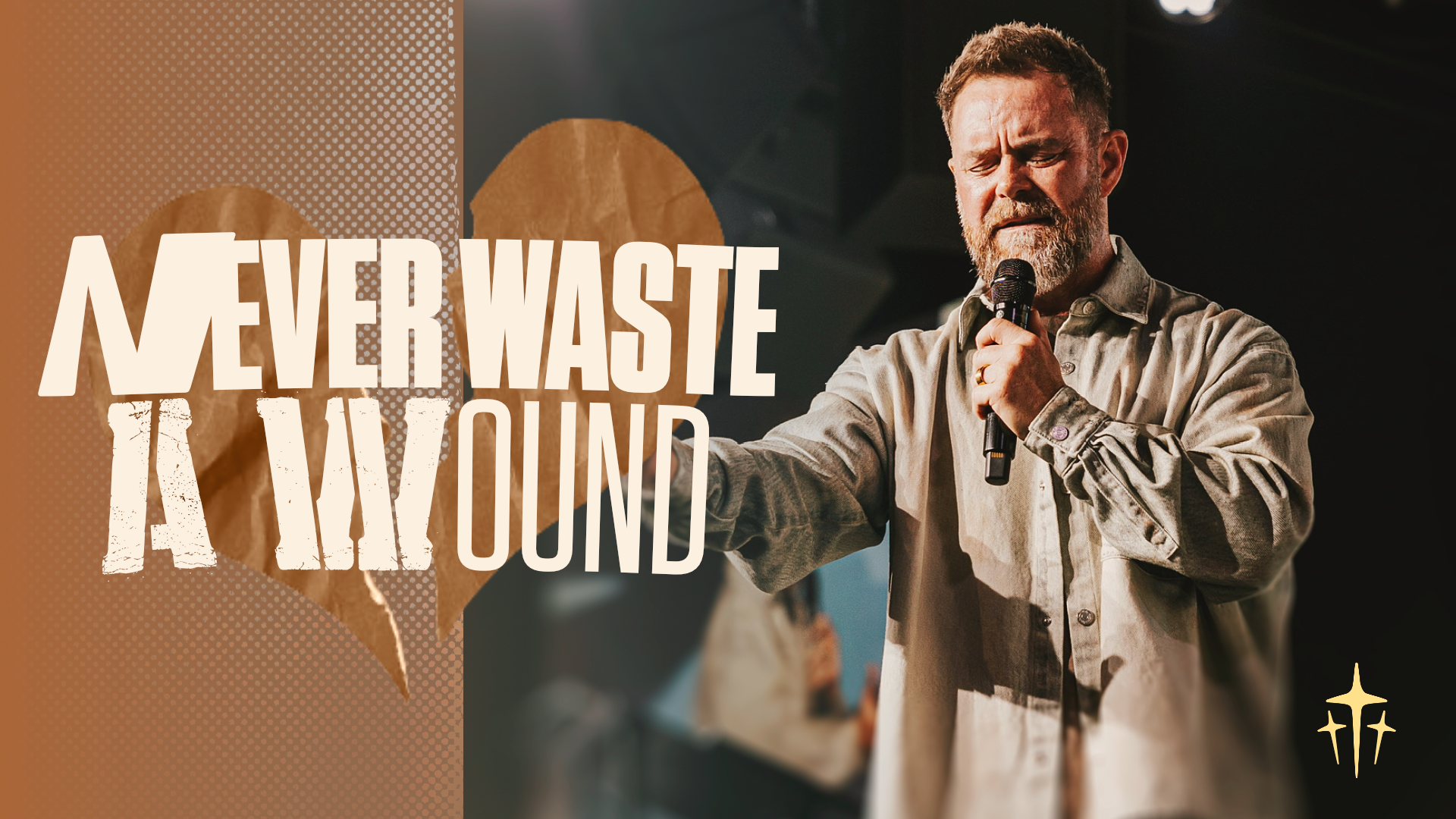
Pastor Travis Hearn preached the fourth week of the series My Wounds Won't Win, and he opened with a simple but startling idea. Jesus rose from the dead with a glorified, perfected body, yet he kept his scars. If anyone could have erased every mark of suffering, it was Jesus, and he chose not to.
That single detail changes how we think about our own wounds. Your pain and purpose are not opposites fighting each other. They can become the same story, and this post walks through exactly how that happens.
What Does It Mean to Start Surrendering Your Wounds to God?
Surrendering your wounds to God does not mean your wound came from him. Pastor Travis Hearn was direct about this: abuse, addiction, betrayal, and divorce are not from God. These things happen because we live in a broken world, not because God assigned them to you.
But surrendering your wounds to God means bringing the hurt into the open instead of burying it. Job lost nearly everything he had, yet even in that darkness he said, "I know that my redeemer lives," a statement that only makes sense once you understand what surrendering your wounds to God actually looks like.
That word redemption means to buy back, to restore, to take something ruined and give it new purpose. Joseph's brothers sold him into slavery and he was falsely imprisoned, yet years later he told the very brothers who betrayed him, "You intended to harm me, but God intended it for good."
Redemption does not pretend the pain never happened. It rewrites the chapter instead of erasing it. Today, try naming one specific wound you have been carrying quietly, and simply tell God you are done hiding it.
How Can Ministry from Your Pain Help Someone Else Today?
Pastor Travis Hearn read 2 Corinthians 1:3 and 1:4 aloud, verses about the God of all comfort who comforts us in our troubles. He pointed out that the passage hinges on two small words: so that. We are comforted so that we can comfort someone else with the same comfort we received.
That is what ministry from your pain actually looks like in practice. Pastor Travis Hearn described it plainly: a former alcoholic is often the best person to help someone still trapped in addiction, and someone who survived a painful divorce can speak into another person's marriage in a way a textbook never could.
He asked the congregation who had once battled alcoholism, addiction, depression, or even thoughts of suicide and was now free, and dozens stood to their feet. Their healing had become ministry from your pain in real time, not because they had it figured out, but because they were willing to say, "I have been there too."
He said something easy to miss the first time you hear it: your healing is not fully complete until it begins healing someone else. Your story was never meant to sit still as private relief. It was meant to move, the way a river moves instead of pooling in one place.
This week, try one small thing: tell one trusted person a piece of your story you have kept hidden, even if it is only one sentence.
What Does Turning Trauma into Testimony Look Like in Real Life?
Pastor Travis Hearn drew a clear line between two responses to pain. You can build a monument to it, where every conversation and decision gets filtered through what happened to you. Or you can build a ministry from it, where the same event becomes something that sets other people free.
He explained this using scripture's most unlikely people. Moses struggled with his own speech yet became God's spokesman, and Rahab, once known for prostitution, ended up in the family line of Jesus Christ. Peter denied Christ three times and still preached the sermon that led three thousand people to faith on the day of Pentecost.
Turning trauma into testimony means your pain stops being your identity and starts being your platform. Pastor Travis Hearn shared his own small scar from a childhood accident, a reminder that even ordinary stories carry weight once they are surrendered honestly. Every scar tells something, but only a surrendered scar preaches something.
He closed with a picture from the resurrection itself. Jesus kept his scars, not because he lost, but because those scars became proof of victory to a doubting disciple named Thomas. The place Jesus bled became the very place people found life, the pattern turning trauma into testimony always follows.
This week, write down one sentence of your story you would be willing to share with someone who is walking through what you already survived. That single sentence may be the beginning of turning trauma into testimony in your own life.
What Does 2 Corinthians 1 Teach About God's Comfort?
2 Corinthians 1 opens with Paul praising God as the Father of compassion and the God of all comfort. 2 Corinthians 1:3-4 explains that God comforts us in every trouble so that we can comfort others with that same comfort. Pastor Travis Hearn built his message around three ideas drawn from this passage.
1. Your Wound Was Not Sent by God
Meaning: Hardship comes from a broken world, not from God's hand, but he can still use what he did not cause.
Scripture Connection: Romans 8:28 promises that God works all things together for good.
2. Your Hurt Can Become Someone's Help
Meaning: The comfort you received was always meant to be shared with someone facing a similar trouble.
Scripture Connection: 2 Corinthians 1:3-4 ties comfort directly to the purpose of ministry.
3. Your Scars Can Become Your Story
Meaning: A surrendered wound becomes evidence of God's faithfulness instead of a source of shame.
Scripture Connection: John 20:27 shows Jesus inviting Thomas to touch his scars as proof of the resurrection.
A few consistent traits of a healing testimony showed up throughout the message.
It names the wound honestly instead of minimizing it.
It gives the wound to God instead of hiding it.
It looks for one person who needs the same comfort you received.
It keeps moving forward instead of staying stuck in the moment of pain.
Where Can You Find People Who Understand This Kind of Story?
Carrying a wound quietly can feel isolating, especially when it seems like everyone around you has it together. That kind of loneliness does not stay in one neighborhood; it shows up whether someone is sitting in a home office in Scottsdale or driving home from work in Tempe. If you have ever felt like your story was too messy to say out loud, you are not the only one wrestling with that in Maricopa County.
The invitation here is simple and low pressure. Impact Church meets people from North Scottsdale to Chandler, and whether you call Gilbert, Paradise Valley, or another corner of the Phoenix Valley home, there is a place nearby where this same conversation is already happening in person.
Your Healing Testimony Does Not Have to Be Wasted
Pastor Travis Hearn's message was simple. Your wound was not sent by God, but it can be used by him, and the same comfort you received was always meant to reach someone else. A surrendered scar proves that you survived, and that survival can become someone else's hope.
Come find a community that gathers around stories exactly like this one every week, and plan your visit below to join us this Sunday at one of our Scottsdale campuses.
You do not have to figure this out alone when a wound still feels too heavy to carry, so reach out here and let our team pray with you and help you take the next honest step.
Frequently Asked Questions
-
Scripture teaches that hardship comes from living in a broken world rather than from God himself. Pastor Travis Hearn explained that things like addiction, abuse, and betrayal are not sent by God, though he can still redeem them for good, as Romans 8:28 describes.
-
Pastor Travis Hearn taught that pain becomes identity when it is buried instead of surrendered. Naming the wound honestly, giving it to God, and eventually using it to help someone else moves the pain from being your personality to being your platform.
-
Yes. 2 Corinthians 1:3-4 says God comforts us in our troubles so that we can comfort others with that same comfort. Many of the most effective encouragers are people who have walked through the very struggle they now help someone else survive.
-
He meant that a surrendered wound can become ministry instead of simply staying private pain. Rather than letting suffering end in silence, he encouraged the congregation to let their story become something that helps someone else find hope.
-
Pastor Travis Hearn pointed out that Jesus could have appeared with a perfect, scar-free body but chose to keep his wounds visible. Those scars became proof of what he survived, especially when he invited the doubting disciple Thomas to touch them as evidence of the resurrection.
Leave us a comment to share your favorite takeaway from the sermon and be sure to share the message with someone you care about.
To support this ministry and help us continue to reach people all around the world, please visit our Giving page.