Planted Part 1: Planted In God's Word
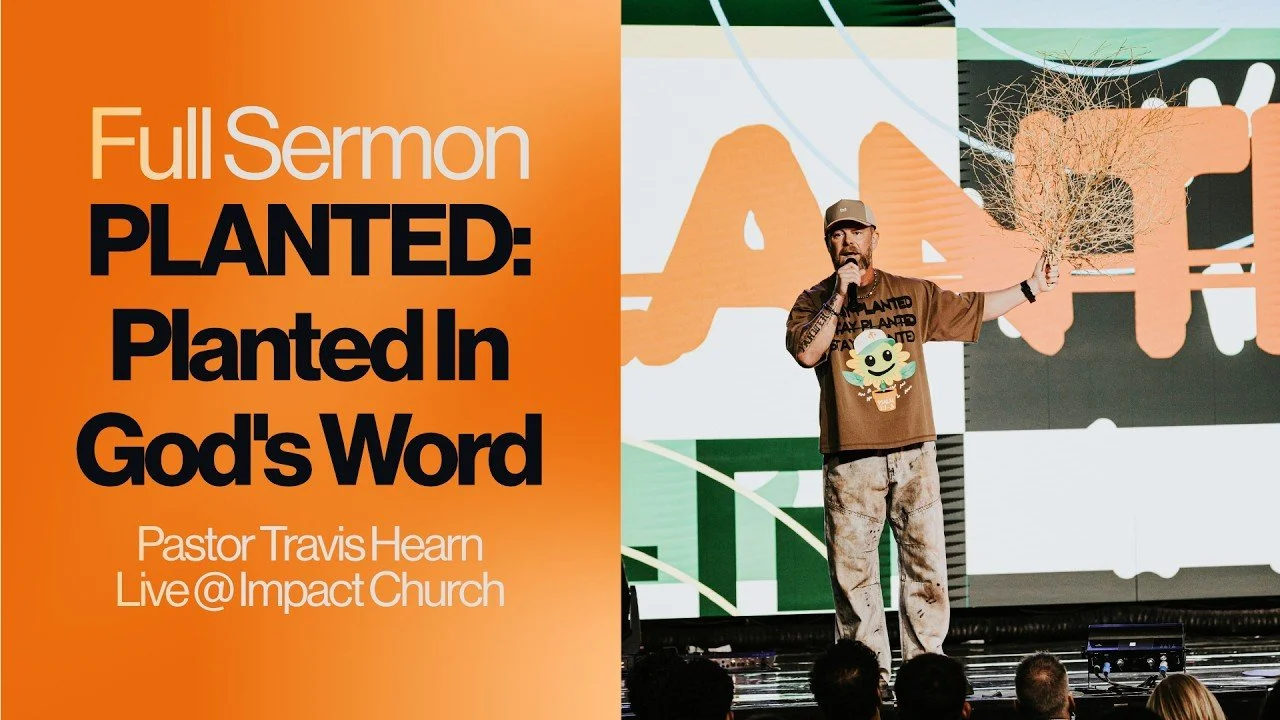
Why You Keep Drifting from God and How to Get Rooted
Spiritual drifting happens when your roots aren't deep enough to hold you when real life arrives. If you keep cycling through seasons of closeness to God only to find yourself hollow and distant a few months later, the problem usually isn't your faith; it's the soil. Getting rooted in Christ isn't a feeling you chase; it's a foundation you build, one daily practice at a time.
Most people who drift didn't plan to. They were genuinely all in at some point — they showed up, they worshiped, they meant every word. But somewhere between the enthusiasm and the everyday grind, something shifted so slowly they didn't even notice until one day they looked around and didn't recognize where they'd ended up. That's not a moral failure. That's what happens when roots are shallow.
If You Don't Know God's Word, Do You Actually Know God?
Pastor Travis Hearn opened this message with a question that cuts clean: if you don't know the word, do you actually know God? It sounds harsh until you sit with it. Pastor Travis put it in terms anyone who's been in a relationship understands: he can't love his wife, Pastor Natalie Hearn, by seeing her once a week, saying "I love you," and then going silent for the next six days. When you love something, your attention follows it.
The same logic applies to God. We live in a moment when the Bible is more available than at any point in human history. You can download it for free, read it in dozens of translations, and follow daily plans that take less than five minutes. And yet, as Pastor Travis pointed out, we are also living through the most biblically illiterate generation on record. People who attend church every week can barely name five stories from the Old Testament, let alone explain what the book of Romans is actually about.
The danger is not just ignorance. In Matthew 13:19, Jesus says that those who hear the message of God and don't understand it are the ones the enemy can most easily rob. When you don't know what God actually said, something or someone will step in to fill that gap. In Genesis 3, the serpent didn't deny God's word to Eve outright; he distorted it. He raised one question: "Did God really say?" Because Eve wasn't standing on what God had actually commanded, she started reshaping it, and the moment the word got distorted, everything fell apart. When Jesus was tempted in the wilderness after forty days of fasting, the enemy came quoting scripture, twisting it and pulling it out of context. Jesus didn't argue. Every single time, He responded: "It is written." When you know the word deeply enough, you don't just hear truth; you recognize lies. A bank teller doesn't learn to spot counterfeit money by studying fakes — they study the real thing until a fake is obvious by feel.
Start small if you have to. Open the Bible app tonight (it's free) and find a five-minute reading plan you can actually commit to. The goal isn't to impress anyone; it's to know the voice well enough that you stop falling for the distortions.
Why Excitement About God Isn't Enough to Make You Stay
There is a real difference between being excited about God and being established in God. Jesus described it in Matthew 13:20–21, talking about seed that fell on rocky soil: they receive the word with joy, but since they have no root, they don't last. They fall away as soon as trouble comes.
Notice what Jesus did not say. He didn't say these people fell because they were bad. He didn't say they fell because of some dramatic rebellion; they fell because their roots were too shallow to hold them when pressure arrived. Not sin. Pressure. Real life showing up with its full weight.
This is what Pastor Travis calls a "tumbleweed Christian." In Arizona, you know what a tumbleweed looks like. It appears alive at first — green, standing, even growing. But once the wind picks up, it doesn't just bend; it breaks loose. It rolls wherever the next pressure takes it, because nothing is anchoring it deeper than the surface. And the terrifying part, as Pastor Travis put it, is this: you can look alive above the ground and be dying below it. You can show up, raise your hands, say all the right things, and still have nothing anchored underneath.
Spiritual roots don't grow from a single emotional moment. They grow the same way physical strength grows: through consistency, discipline, and time. Pastor Travis shared a passage he had recently used in a Bible study chapel with the NBA's Phoenix Suns, from 1 Timothy 4:7–8 in the Phillips translation: "Take the time and the trouble to keep yourself spiritually fit." Not just spiritually inspired; spiritually fit. Inspiration is a spark. Fitness is what you build every day whether you feel like it or not.
One practical step today: set an alarm for ten minutes earlier than you normally wake up. Use it to read one chapter, one psalm, one passage — not to perform a religious duty, but to build something that will hold when the storms come.
What's Quietly Crowding God Out of Your Life?
The third point from Matthew 13:22 is the one most people aren't expecting. Jesus says the word gets choked out not by outright rebellion, but by "the worries of this life and the deceitfulness of wealth." Weeds. Not boulders, not disasters; weeds. The slow-growing things that steal nutrients without announcing themselves.
Most people don't lose their faith in a single dramatic moment. They just slowly get crowded out — anxiety takes up more space, chasing more takes up more space, notifications and comparison and the endless low-grade noise of a life that's always on. And here's the part that's hardest to sit with: you don't have to reject God's word for it to disappear from your life. You can simply neglect it. Neglect is just as effective as rejection, because whatever gets the most consistent attention is what grows.
Pastor Travis put it plainly: some people aren't falling away; they're just being slowly suffocated. Something keeps growing in soil that hasn't been tended, until the thing God planted has stopped growing because it ran out of space. The word didn't die; it just got crowded. It had potential, it had some life in it, but something else was also growing in the same soil.
The answer isn't a radical life overhaul. It's simpler, and harder: pull the weeds. Look honestly at what's consuming the most of your attention and ask whether that thing is making you more rooted or more hollow. It might be a relationship pulling you away from where you're trying to grow. It might be a habit that fills every quiet moment before God can reach you. As Pastor Travis closed: healthy things don't just grow; they're cultivated. That cultivation is yours to choose. Ask yourself this week: what do I need to clear out to make room for what matters?
What Does It Look Like to Be Rooted vs. Drifting?
1. Your Source of Truth
Rooted: Returning consistently to God's word to understand what God actually said, building the ability to recognize distortion when it shows up.
Drifting: Relying on opinions, cultural voices, or emotional impressions to fill in the gaps of what God meant.
2. Your Response to Pressure
Rooted: Faith holds under real-life weight because it was built on something deeper than a feeling or a moment.
Drifting: Falls away when trouble arrives, not because of rebellion, but because nothing was anchored below the surface.
3. Your Daily Habits
Rooted: A consistent routine with God's word, even briefly — not because you feel like it, but because roots grow through discipline and repetition.
Drifting: Engaging faith only when motivated, in crisis, or when the emotional high is still fresh.
4. What's Growing in Your Soil
Rooted: Intentionally pulling weeds — clearing out the worry, noise, and distraction that compete for the space God's word needs to produce fruit.
Drifting: Letting busyness, anxiety, and the love of more grow unchecked until the word is quietly suffocated out.
For Anyone in the Phoenix Valley Asking These Same Questions
There are a lot of people quietly asking versions of this same question in their own lives: why does faith feel so fragile, and why do I keep ending up back at zero? That kind of drift doesn't announce itself — it just slowly hollows things out until one day you realize you're not where you meant to be. If that's where you are right now, you're not alone, and there's nothing wrong with you that a little honest tending can't start to fix. Impact Church exists for exactly this kind of moment, with campuses in North Scottsdale and South Scottsdale serving people from across Maricopa County — whether you're in Tempe, Chandler, Gilbert, or Paradise Valley.
You're Not Gone — You're Just Not Growing Yet
Spiritual drifting is not the end of the story. The seed wasn't destroyed in Jesus's parable; it just never got to where it was meant to go, because the soil wasn't ready, or the roots weren't deep, or the weeds took over. Every one of those conditions can change. Getting rooted in Christ is not a destination you arrive at; it's something you tend every single day, until the storms come and you realize you're not blowing away anymore.
If something in this message is stirring something in you, the most honest next step you can take is to bring it to God directly. Submit a prayer request here and let someone at Impact Church walk with you through it — there's no requirement to have anything figured out first. To see what this community looks like in person, take the next step below and plan a visit at whichever campus is closest to you.
Frequently Asked Questions
-
Drifting usually happens gradually, not all at once. According to Jesus's parable in Matthew 13, shallow roots are the most common cause. When faith is built on feelings and emotional moments rather than consistent time in God's word, it has no depth to hold it when real-life pressure arrives. The drift isn't always caused by sin or rebellion; sometimes it's simply distraction, busyness, or the slow crowding out of what matters most.
-
Being rooted in Christ means your faith is anchored in something more durable than feelings or circumstances. Psalm 1 describes it as being like a tree planted by streams of water — consistently nourished, bearing fruit in every season, and not withering under heat. Practically, it means daily engagement with God's word, a routine that prioritizes spiritual growth, and intentionally clearing out whatever is competing for that space in your life.
-
Being planted in God's word means more than reading it occasionally. It means meditating on it (focused, repeated thinking), studying it with enough depth to actually understand what it says, and allowing it to shape how you interpret everything else you hear. When you're truly planted, you don't just hear truth; you develop the ability to recognize when something false is being offered in its place.
-
Jesus specifically described people who receive the word with joy but have no root, and when trouble comes, they fall away. Emotion is real and valuable, but it isn't a root system. Just like physical fitness can't be built from motivation alone (it requires discipline, consistency, and showing up when you don't feel like it), spiritual strength works the same way. The excitement is a good starting point, but roots are built in the quiet, daily work that follows.
-
Jesus named two things directly in Matthew 13:22: the worries of this life and the deceitfulness of wealth. In practical terms, this looks like anxiety that consumes your mental space, the relentless drive for more, comparison, and the constant noise of a life that never gets quiet. The word doesn't always disappear dramatically; it gets slowly suffocated by whatever else is allowed to grow unchecked in the same soil.
Leave us a comment to share your favorite takeaway from the sermon and be sure to share the message with someone you care about.
To support this ministry and help us continue to reach people all around the world, please visit our Giving page.