This is What Happens When You Surrender to God’s Will
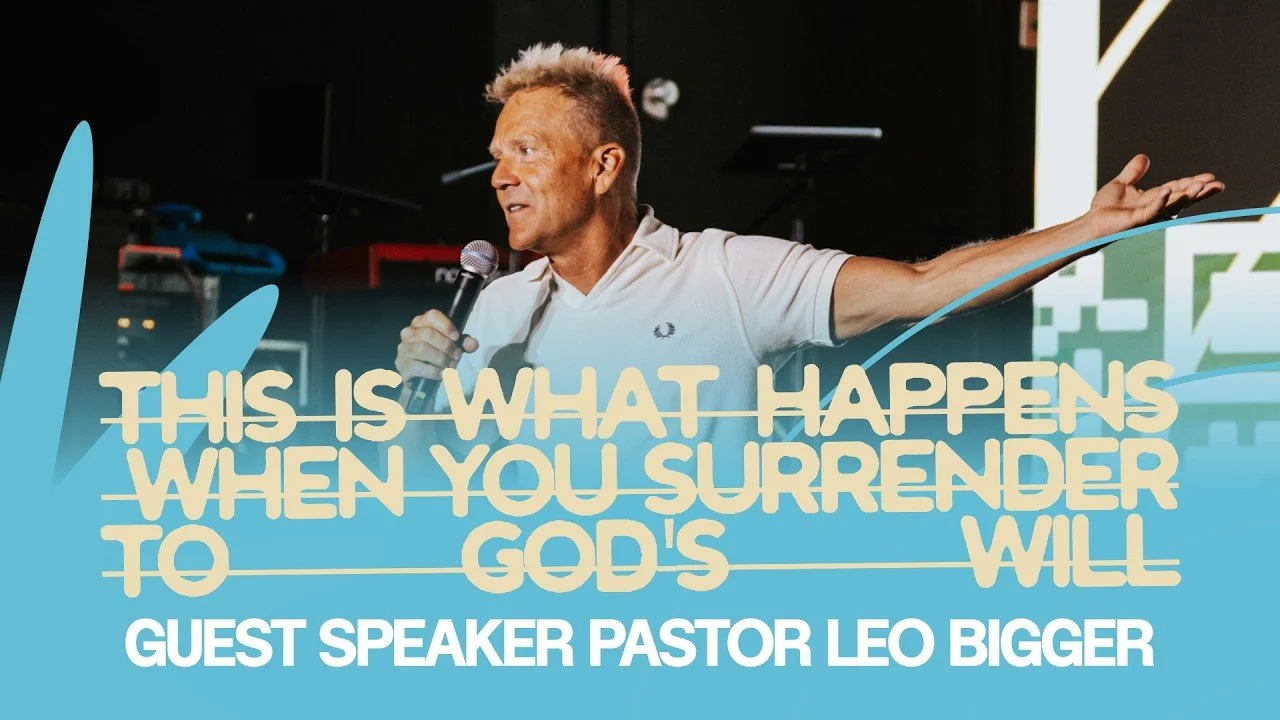
Why Surrendering to God Feels Hard Before the Breakthrough
Surrendering to God is one of the most counterintuitive things a person can do. You say yes to something that costs you, you step out in faith, and then everything seems to fall apart instead of coming together. That is not a sign you got it wrong. It is actually a sign you are right in the middle of what God is doing.
When God's Calling Feels Like a Dead End
There is a moment in almost every person's story where they said yes to something hard. Maybe it was a marriage that required real sacrifice. Maybe it was walking away from a job that paid well but hollowed you out. Maybe it was finally showing up at a place where people pray and you had no idea why your feet kept carrying you there. Whatever that moment looked like, the feeling was the same: a door opened, something shifted inside, and you moved toward it.
Moses had that same moment. His story gets cleaned up in Sunday school flannel boards and children's books, but the real version is far more unsettling. Moses grew up in Egyptian luxury, discovered his true identity as a Hebrew, killed a man out of rage and misplaced justice, and spent the next forty years hiding in the desert tending sheep. He was not a polished leader in waiting. He was a fugitive in exile. And God found him there.
When God called Moses to go back to Egypt and confront the most powerful man on the planet, Moses pushed back hard. He gave God five reasons why this was a bad idea: who am I, who are you, they won't believe me, I can't speak, send someone else. Every objection sounds completely reasonable when you are standing at a burning bush with no credentials and a forty-year track record of running from problems. God's calling rarely looks like what we expected. When a calling feels impossible, that is not a disqualifier. It is practically a prerequisite.
The practical step here is uncomfortable but honest: write down the thing you have been telling God is impossible. Not to argue with it, just to see it clearly. The goal is not to manufacture courage but to stop pretending the fear is not there.
How the Valley of Disappointment Becomes the Place God Does His Work
The phrase "valley of disappointment" does not come from a self-help book or a motivational poster. It comes from the lived experience of people who said yes to God and then watched things deteriorate. Moses went to Pharaoh on fire. He had the staff of God in his hand. He delivered the message with authority. And Pharaoh said no, then made conditions worse for the Hebrew slaves. Moses went straight back to God with a prayer that sounds less like worship and more like a complaint: why, Lord, why have you brought trouble on these people? You have not rescued your people at all. (Exodus 5:22–23 names the raw despair that follows the obedience; Exodus 4:20 marks the quiet turning point when Moses picked up the staff and started walking anyway.)
The valley of disappointment is the gap between what God promised and what you can currently see. It is where the first three plagues hit everyone equally; the people you were hoping to see freed are suffering right alongside everyone else. There is no separation yet, no visible sign that anything you did mattered. You prayed. You showed up. You kept going. And the numbers are still down, the relationship is still broken, the diagnosis did not change.
Guest preacher Pastor Leo Bigger, who has planted more than 100 churches across multiple continents, shared a story from his own valley of disappointment. A 32-year-old worship leader in his church had written every song the congregation sang. She was their most gifted leader. She got cancer. The entire church prayed and fasted for nine months. She died anyway. Her last words to him were "hasta la vista." In the year that followed, Pastor Leo could not pray for the sick anymore. He could not write worship songs. The valley had swallowed the music. He did not wrap that story in a tidy resolution. He sat in it, because that is what the valley of disappointment requires.
The actionable step here is small but important: give yourself permission to be in the valley without deciding that the valley is permanent. Tell someone you trust where you actually are, not the version you have been presenting at work or on social media.
What Spiritual Breakthrough Actually Looks Like on the Other Side
Every person who has ever experienced a genuine spiritual breakthrough got there the same way: they did not quit in the middle. That is almost the entire lesson. The breakthrough is not a reward for perfect faith. It is what waits on the other side of a valley you refused to exit through the shortcut of giving up.
Pastor Leo walked through the structure of what Moses's journey actually looked like. The first three plagues hit Egyptian and Hebrew alike, with no visible sign of God's favor or protection. But from plague four through plague ten, a line was drawn. The Israelites were separated out. What had been crushing them started bypassing them. The shift came, but it came slowly, and it came in the direction of the people who stayed. The spiritual breakthrough was not a sudden dramatic rescue; it was a gradual, unmistakable turning of the tide.
The staff Moses carried into Egypt is a picture of this. Before Moses said yes, it was his staff: a symbol of his life, his income, his identity. When Moses began the journey of surrendering to God, the same staff became something different. It became the staff of God, a symbol of calling, authority, and miraculous power. Nothing about the physical object changed. What changed was whose hands it was in and what it was being used for.
That is exactly what surrendering to God does to ordinary things. A willingness to stay in a hard marriage, a decision to keep showing up somewhere when nothing appears to be working, a choice to tell the truth when a lie would be easier. These are the staffs of ordinary people. Held in the hands of someone who has said yes and refused to quit, they carry a weight that was not there before. The spiritual breakthrough was inside the act of obedience all along.
The step here is specific: identify one place where you are about to quit. Not to guilt yourself into staying, but to ask honestly whether you are leaving the valley one step before the shift.
What Does Exodus 4 Teach Us About Saying Yes Before You Feel Ready?
Exodus 4 is one of the most honest passages in the entire Bible because it shows a called person who is terrified, under-qualified, and completely resistant to what God is asking. Exodus 4:20 is the quiet verse that does not get preached often enough: "So Moses took his wife and sons, put them on a donkey, and headed back to the land of Egypt. And Moses took the staff of God in his hand." There is no fanfare. No crowd. No sign yet that anything will work. Just a man on a donkey with a stick, moving back toward the hardest thing he had ever run from.
The five phases of Moses's journey form a cycle that Pastor Leo described as one that does not end until heaven:
1. The Encounter
What it looks like: A moment of unexpected clarity where God interrupts your plans and places something in you that was not there before.
What it requires: Willingness to stop running from the thing you have been avoiding.
2. The Doubt Phase
What it looks like: The immediate internal objection that what God is asking is impossible.
What it requires: Naming the fear honestly instead of dressing it up as wisdom.
3. The Obedience Phase
What it looks like: Saying yes when everything in you wants to say later, or send someone else.
What it requires: A single concrete step in the direction of the calling, not a fully formed plan.
4. The Valley of Disappointment
What it looks like: Things getting worse before they get better; resistance showing up exactly where you expected breakthrough.
What it requires: Refusing to give the disappointment a permanent seat at your table.
5. The Promised Land
What it looks like: A breakthrough that could not have arrived any other way, because the valley was what prepared you for it.
What it requires: Looking back honestly and telling the truth about what the valley actually produced in you.
If You Are in the Desert Right Now, You Are Not Alone
There is a particular kind of exhaustion that comes from doing the right thing and watching it cost you anyway. That weight does not belong to any one person or any one season of life. It belongs to anyone who has ever said yes to something hard and found themselves wondering if it was worth it. If that is where you are, Impact Church exists as a community for exactly that moment. With campuses in North Scottsdale and South Scottsdale, and a congregation that draws from Tempe, Chandler, Gilbert, Paradise Valley, and communities across the greater Phoenix Valley, there is likely a campus closer to you than you think. You do not have to have it figured out to show up. You just have to show up.
Whatever Season You Are In, You Are Not Stuck Here Forever
The valley of disappointment is real. No one who has spent time in it would tell you otherwise. But no one who came out the other side would trade what they found there. The message preached April 27, 2026 was a reminder that the cycle of encounter, doubt, obedience, struggle, and breakthrough is not a failure cycle. It is how growth actually works. The valley is not a dead end. It is a passageway.
Submit a prayer request and let someone carry this with you. Find it here.
When you are ready to take a step in person, we would love to meet you. Plan your visit below.
Frequently Asked Questions
-
Resistance is not a sign that you made the wrong decision. The message from Exodus makes it plain: Moses faced his hardest season immediately after he said yes and began moving toward his calling. Saying yes to God does not remove obstacles; it often reveals them. The challenges that surface after obedience are part of what forms the person you need to become for the thing God has called you to do.
-
The shift in Moses's story did not come during the first three plagues, when everything was still painful for everyone. It came later, and it came without warning. Trusting God when nothing appears to be improving is less about manufacturing positive feelings and more about refusing to make a permanent decision in a temporary season. Name honestly where you are, stay connected to people who will tell you the truth, and resist the conclusion that the valley is the whole story.
-
Disappointment with God almost always lives in the gap between what we expected and what actually happened. Pastor Leo Bigger described watching his church's most gifted worship leader die of cancer after nine months of corporate prayer and fasting. He did not explain it away. He acknowledged that the valley of disappointment is where doubt sneaks in and where many people quietly exit their faith. Being honest about that disappointment, rather than suppressing it, is what creates the conditions for real healing.
-
The valley of disappointment is the season between a clear calling and a visible breakthrough, where everything appears to be going in the wrong direction. In Moses's story, it is the period where Pharaoh refused, the Hebrews suffered more, and Moses cried out to God in confusion and grief. Pastor Leo also connects it to Psalm 23 and its reference to the valley of the shadow of death: a place you walk through, not a place you stay.
-
One honest indicator from this message: if what you are sensing feels impossible, you may be closer to God's calling than you think. Moses listed five reasons why he was unqualified, and God answered every one of them. Your calling is not usually the thing that feels safe and manageable. It is the thing that requires you to pick up a staff and start walking before you know how it ends.
Leave us a comment to share your favorite takeaway from the sermon and be sure to share the message with someone you care about.
To support this ministry and help us continue to reach people all around the world, please visit our Giving page.