Changed Part 3: Never Going Back
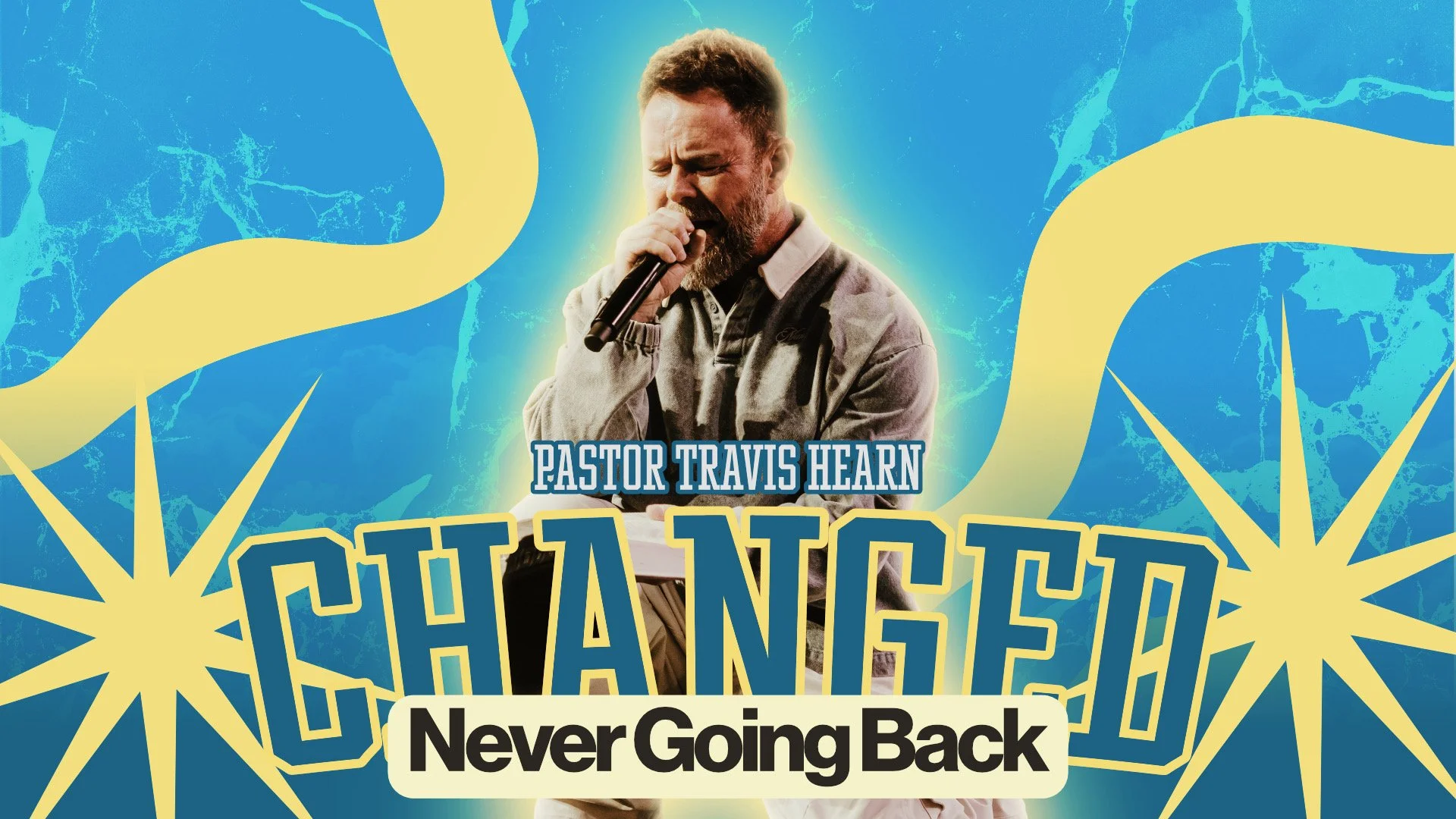
Breaking Old Habits: Why You Keep Going Back and How to Stop
Breaking old habits starts with understanding why you keep returning to them in the first place. The cycle is not a sign that you are weak or beyond hope; it is a sign that you left the door open. In this message from the "Changed" series at Impact Church, Pastor Travis Hearn offers three practical, honest keys to letting go of your past and walking forward without looking back.
Why Does Spiritual Transformation Feel So Hard to Sustain?
Most people who want to change actually do change, at least for a while. They leave the relationship. They stop the habit. They put the phone down and walk away. But spiritual transformation that actually sticks requires more than willpower and good intentions; it requires a decision about where your heart is pointed.
Pastor Travis Hearn opened this message with a question that cuts straight to the bone: "Why would you ever go back to the things you prayed yourself out of?" It sounds almost absurd until you think about the Israelites in the book of Exodus. God had freed them from 400 years of slavery in Egypt. He parted the Red Sea. He sent manna from heaven. He showed them his glory on Mount Sinai. And roughly 14 months after their liberation, they were standing in the wilderness saying they wanted to go back. Not because Egypt was good, but because it was familiar. In Numbers 14:2-4, the Israelites told Moses and Aaron: "Wouldn't it be better for us to go back to Egypt?" They had witnessed miracle after miracle, and they still chose the predictability of prison over the possibilities of the promised land.
That same pull lives in every human heart. The greatest obstacle to God's future for your life is not the enemy; it is your unhealthy attachment to what is behind you. Some people would rather live in the familiarity of bondage than walk by faith into freedom. The prophet Isaiah addressed this directly in Isaiah 43 when God said, "Forget the former things. Do not dwell on the past. See, I am doing a new thing." Something that happened behind you does not have to paralyze what is in front of you.
This is where breaking old habits actually begins: not with more discipline, but with a decision about what you are willing to let go of. The first key Pastor Travis gave is simply this: do not even look back. Not because the past was not real, but because looking back is the first step toward going back. Today, write down one thing from your past you have been replaying, and consciously choose not to return to it in your mind.
Burning Bridges With the Past: Why You Cannot Keep a Backup Plan
Most of us leave the door slightly cracked. We end the relationship but keep the number. We stop the habit but leave access to it. We walk away from the compromise while still flirting with the edges. And then we wonder why spiritual transformation never seems to hold.
Pastor Travis put it plainly: burning bridges with the past is not optional if you actually want to change. He drew on the story of Elisha in the Old Testament. When the prophet Elijah called Elisha to follow God, Elisha did not just walk away from his old life. He slaughtered his oxen, burned his plowing equipment, and fed the meat to the people. He was not just leaving a field; he was eliminating an option. Because as long as the plow still existed, the temptation to return to it still existed. Elisha burned the backup plan entirely.
That is the problem Pastor Travis named honestly: modern people want a transformed future while keeping an emergency exit to the old one. We want freedom, but we keep the number. We want purity, but we keep the app. We want healing, but we keep reopening the wound. Burning bridges with the past means looking at every escape route you have left open and choosing to close it permanently. Transformation does not come without separation. You cannot fully embrace your future while preserving access to your past.
This is not about willpower. It is about consecration. Elisha burned the bridge not in a moment of emotion but in a deliberate act of surrender. He was not just saying goodbye; he was making the old life structurally impossible. Think about what bridge in your life still has a footpath across it. Today, identify one specific point of access to the old version of yourself and remove it.
Never Going Back to Sin: What It Means to Step Into Your Promised Land
There comes a moment when enough circling has to stop. Pastor Travis spoke directly to people who have been stuck in the middle: torn between their past and their future, between who they used to be and who God is calling them to become. Never going back to sin is not primarily about white-knuckling your way through temptation. It is about making a decision to step forward, even before the path is fully clear.
In Joshua 3:5, when Joshua was about to lead the Israelites into the promised land after Moses had died, he told them one thing: "Consecrate yourselves, for tomorrow the Lord will do amazing things among you." To consecrate yourself means to set yourself apart, to remove yourself from one way of life and position yourself fully in God's way. And the sequence matters: you consecrate first, and then God moves. The Jordan River did not part before the priests stepped in. It parted after. The miracle happened after the step of faith.
You may be standing at the edge of your own Jordan right now. The Jordan of addiction. The Jordan of shame. The Jordan of a relationship you have not fully walked away from, or an old version of yourself you keep trying to resurrect. God is not asking you to have it all figured out before you move. He is asking you to step in.
Pastor Travis closed the message by calling people to the altar, not as a performance but as a place of sacrifice. The altar is where things die. Not to be brought back. Not to be mourned. To be laid down so that something greater can live. Romans 12:1 says, "I urge you, brothers and sisters, in view of God's mercy, to offer your bodies as a living sacrifice, holy and pleasing to God." That is what true worship looks like: not just singing, but surrendering.
If you are genuinely trying to let go of your past and step into something new, never going back to sin does not begin with perfection. It begins with a single consecrated decision. Today, call whatever is still holding you by its name, and lay it down. Not in general terms. By name.
What Does 2 Corinthians 5 Say About Becoming a New Creation?
Every week of the "Changed" series has opened with the same verse, and for good reason. 2 Corinthians 5:17 reads: "Therefore, if anyone is in Christ, he is a new creation. The old has gone, the new is here." This is not a metaphor for self-improvement. It is a declaration of total transformation.
The verse sits inside a larger passage in 2 Corinthians 5 where the Apostle Paul is describing what it means to live in light of Christ's resurrection. The old way of seeing yourself, your past, your failures, the labels you have been carrying, all of it belongs to a previous version of you that no longer has to define you. That is the theological ground underneath every practical key Pastor Travis gave in this message.
1. Don't Look Back
What it means: Looking back is not just a nostalgic habit; it is a faith failure. Jesus said in Luke 9:62 that no one who puts a hand to the plow and looks back is fit for service in the kingdom of God. Looking back is about devotion, not direction. Lot's wife, described in Genesis 19:26, became a pillar of salt not because she took a wrong turn but because her heart was still in Sodom when God was trying to save her from it.
Why it matters: When you look back, you make going back a possibility. The enemy does not need you to abandon your faith entirely; he just needs you to keep the option open.
2. Burn the Bridges
What it means: Complete separation from what God has delivered you from. Not a gradual drift, but a deliberate act of elimination, like Elisha burning his plow and slaughtering his oxen.
Why it matters: As long as the bridge exists, crossing it remains a choice. Burning bridges with the past removes the choice entirely and forces your heart to face forward.
3. Step Into Your Promised Land
What it means: Consecrate yourself, as Joshua 3:5 commands, and take the step of faith before the river parts. The miracle follows the obedience.
Why it matters: You will never reach the promised land of your life while you are still looking over your shoulder at Egypt. The step of faith is not a feeling; it is a decision.
There Are People All Across the Valley Standing at This Same River
That quiet ache of being stuck between who you were and who you want to be is not unique to any city or zip code. It shows up in every kind of life, in every neighborhood, in every season. It is the 3 a.m. feeling of reaching for the thing you swore you were done with, the guilt that follows, and the exhaustion of repeating the same cycle.
If any of that is familiar, you are not alone. Whether you are in North Scottsdale or South Scottsdale, in Tempe or Gilbert, in Chandler or Paradise Valley, Impact Church exists for people across the greater Phoenix Valley who are done circling the same mountain and ready to take the next step. Both campuses are full of people who are not pretending to have it together but are committed to walking forward together.
If you have been circling long enough, this is your invitation to step off it.
You Are Not Who You Used to Be
The old you does not have to have the final word. That is the whole point of 2 Corinthians 5:17 and the whole thrust of what Pastor Travis preached in this message. The Israelites had every reason to keep moving forward; they chose fear instead. The Apostle Paul had every reason to be paralyzed by his past; he chose to press on toward the goal. You have the same choice in front of you today.
Do not look back. Burn the bridges. Step into your promised land. The miracle happens after the step of faith.
If something in this message touched a real place in your life, you do not have to sit with it alone. Submit a prayer request here and let someone walk with you toward what comes next.
If you are ready to experience this community in person, plan your visit below and come find a place to belong at Impact Church in the Phoenix Valley.
Frequently Asked Questions
-
Returning to old habits is often less about willpower and more about access. If you have not fully removed the points of access to your old patterns, the bridge back is always available. Pastor Travis Hearn describes this as leaving the plows intact: as long as they exist, the temptation to return to them exists. Real change requires eliminating the options, not just resisting them.
-
Stopping the cycle requires both decision and action. Identify the specific access points to the sin or addiction and remove them concretely, whether that means deleting a number, closing an account, or removing yourself from a particular environment. Pair that with what Joshua 3:5 describes as consecration: deliberately positioning yourself in God's ways rather than simply stepping away from the old ones.
-
Breaking free from addiction and staying free involves three movements: stop looking back at what you left, burn every bridge that leads back to it, and step forward into who God is calling you to become. This is not a one-time decision but a daily orientation. Celebrate Recovery at Impact Church is a Christ-centered program designed specifically for people walking through this process with community and support.
-
Pastor Travis Hearn explains that she was crystallized in the position of her last rebellion. Looking back was not a navigational error; it was a devotional one. Her heart was still in Sodom even as God was trying to save her from it. She became a monument to what happens when your heart is reaching for what God is trying to rescue you from. The story is a warning, but also an invitation: keep moving toward what God has ahead.
-
To consecrate yourself, as Joshua told the Israelites in Joshua 3:5, means to set yourself apart from the ways of your old life and position yourself fully in alignment with God's ways. It is not about being perfect; it is about being pointed in the right direction. Joshua did not tell the Israelites to wait for the river to part first. He told them to consecrate themselves and step in. The miracle follows the obedience.
Leave us a comment to share your favorite takeaway from the sermon and be sure to share the message with someone you care about.
To support this ministry and help us continue to reach people all around the world, please visit our Giving page.