Changed Part 4: Change the Temperature
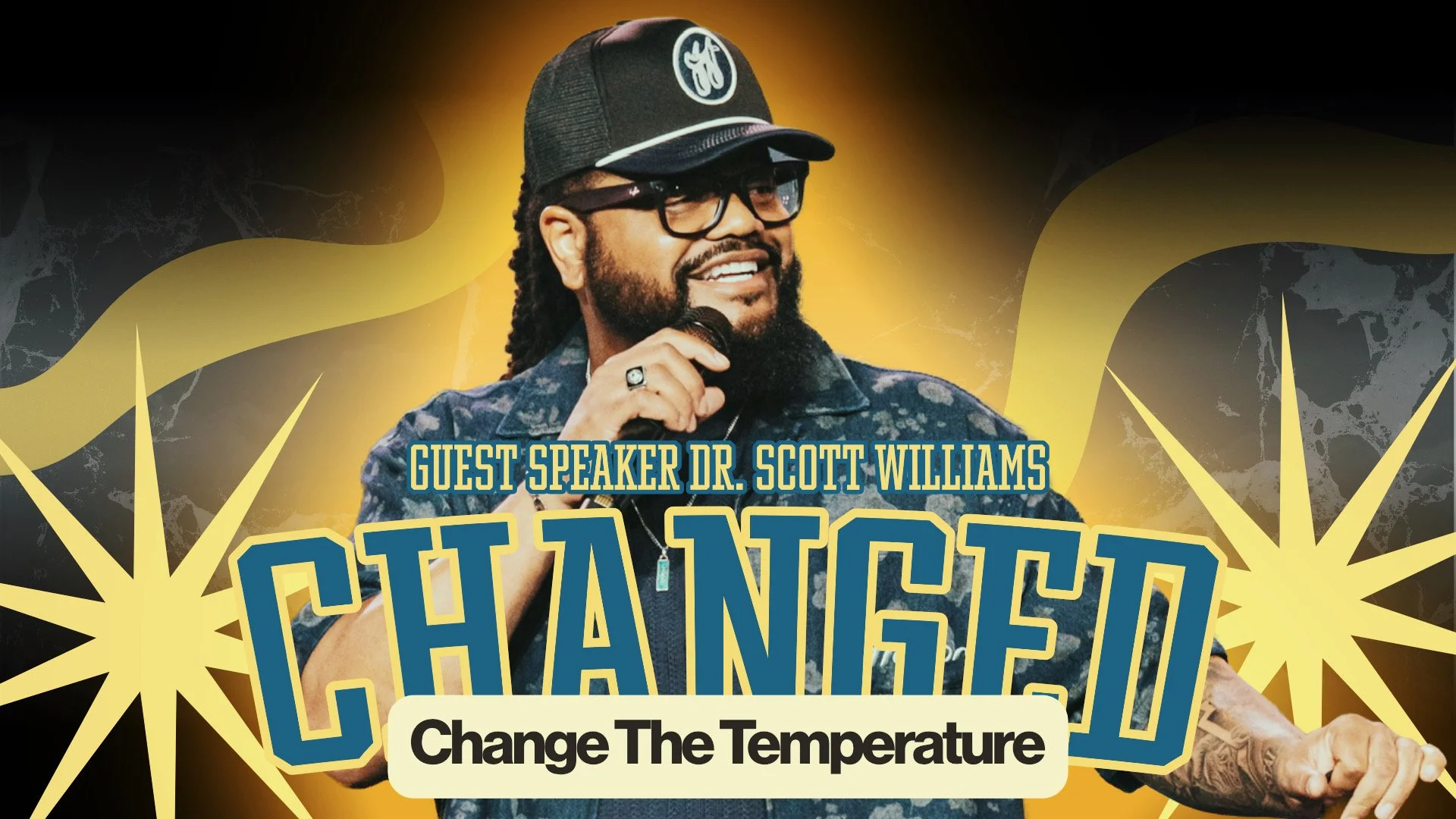
Thermostat Dad: How Fathers Change the Atmosphere at Home
Nobody tells you that walking through the front door after a long day is a leadership decision. But the moment you step inside, something shifts. It either moves toward steadiness or it doesn't. Fathers set the atmosphere at home every time they show up, whether they intend to or not. This sermon, delivered as part of Impact Church's "Changed" series, unpacks what it looks like to stop reacting to the temperature in your house and start setting it instead, through three practical and biblical moves any father can make starting today.
Does a Thermostat Dad Actually Lead His Family, or Just React to It?
There is a difference between a thermometer and a thermostat that most men never think about. A thermometer reads the room. A thermostat sets it. Dr. Scott Williams, guest speaker and longtime friend of Impact Church, drew on this image to name something many fathers feel but can't quite articulate: they are constantly reacting to whatever mood, conflict, or chaos greets them at the door, instead of walking in with a settled, grounded presence that draws the whole household toward something better.
This is not about being emotionally flat or pretending everything is fine. A thermostat dad isn't stoic; he's stable. He's been shaped by something bigger than the day's frustrations, and that stability is contagious. When family leadership flows from that kind of steadiness, children don't have to check the forecast to figure out which version of their father is coming home.
Godly fatherhood starts here, with the recognition that you are not just a presence in your home. You are a force. The question is whether you are using that force intentionally or accidentally. Family leadership is not a title your kids bestow on you; it is a posture you choose every single time you walk through that door.
One honest practice: before you enter your house today, sit in your car for sixty seconds. Take a breath. Decide what temperature you want to bring in.
How Does Speaking Life Over Your Family Change What They Become?
Words are not neutral. Dr. Williams opened the sermon by citing Proverbs 18:21, one of his foundational texts: "The tongue has the power of life and death, and those who love it will eat its fruit." He mentioned having that verse tattooed on his arm so that every time he bends his elbow, it's in front of him. That's not a motivational trick; that's a man who knows he needs the reminder.
Speaking life over your family is the invisible architecture of a household. What you say to your kids every day, in the car, at breakfast, when they fail, when they try: those words become the story they tell themselves. Dr. Williams asked directly: if someone polled your children right now, would they say you speak life or death over them? Most fathers wince at that question because they know the honest answer.
Proverbs 22:6 adds the long-game dimension: "Train a child in the way they should go, and when they are old, they will not depart from it." The words a father speaks and the values he models in the years of training don't evaporate. They travel with a child into adulthood, into relationships, into the way they eventually parent their own children. Speaking life over your family is not a one-time speech; it is a daily cultivation of what you want to grow.
What Does Family Leadership Actually Look Like When No One Modeled It for You?
This is where the sermon gets honest in a way that a lot of Father's Day messages avoid. Dr. Williams grew up without a father in the home. He became one of the youngest prison wardens in the country at age twenty-five, watching the data play out in front of him in real time: 85 percent of youth in juvenile detention come from fatherless homes, and 76 percent of young adults in the prison system were raised without a dad. He did not cite those numbers to condemn anyone. He cited them because he had lived adjacent to that pipeline and was determined not to feed it.
His core message was this: your past is not your ceiling. The text he kept returning to, Ephesians 6:4, does not say, "Fathers who had great role models, do this." It says, "Fathers, do not provoke your children to anger, but bring them up in the discipline and instruction of the Lord." The mantle falls on your shoulders regardless of who dropped it before you. Thermostat dads regulate, cultivate, and elevate. They regulate by not coming into the house "on 83," carrying work stress and anger that scorches everyone nearby. They cultivate by sowing consistency over time, watering their own grass instead of envying someone else's. And they elevate by putting God first and treating their family as their primary ministry, not an afterthought after fantasy football and golf.
That last shift is the hardest. It requires a man to look at his calendar and ask, honestly, whether the evidence of his time says his children are a priority. No guilt trip required. It is simply the question a thermostat dad is willing to sit with.
One honest practice: write down three moments this week where you can choose to be fully present with your child, undistracted. Put them in your calendar like an appointment.
What Does Ephesians 6 Say About Fathers and the Home?
The sermon anchored its three points in a single verse. Ephesians 6:4 reads: "Fathers, do not provoke your children to anger, but bring them up in the discipline and instruction of the Lord." Dr. Williams pointed out something easy to miss: the text doesn't blame the father for his failures. It calls him up into his authority. That distinction matters enormously for any man carrying shame from years of absence, passivity, or inconsistency.
1. Thermostat Dads Regulate
What it means: Don't provoke your children to anger. Don't walk in hot, unpredictable, venting what the day did to you onto the people who need your steadiness most.
What it looks like: Emotional self-regulation is a spiritual discipline, not just a personality trait. A father who has surrendered his reactivity to God brings a different energy into every room he enters.
2. Thermostat Dads Cultivate
What it means: "Bring them up" implies consistent investment over time. You don't cultivate a harvest in a day.
What it looks like: Sow consistency. Stop comparing your household to others. What you water grows; what you neglect dies. Water your own grass.
3. Thermostat Dads Elevate
What it means: "In the discipline and instruction of the Lord" means God is not optional in the home. He is the source.
What it looks like: A thermostat dad treats his family as his primary ministry. His presence, his prayer, and his faith in action become the ceiling his children will one day reach toward.
Where Men Carry This Weight Across the Valley
There are men across Maricopa County, from North Scottsdale to Tempe, from Gilbert to Chandler, who walked into this Father's Day carrying something heavy: the weight of absence, their own or their father's. Whether you grew up in South Scottsdale or Paradise Valley, that weight doesn't sort itself by zip code. If you've been looking for a community in the Phoenix Valley that will speak plainly about what family leadership actually costs and what makes it worth it, Impact Church welcomes you at 13802 N Scottsdale Rd, Scottsdale, AZ, with services every Sunday at 8:30 AM, 10:30 AM, and 12:30 PM.
The Temperature You Set Today Will Outlast You
Dr. Williams closed by inviting every man in the room to make a decision. Not a magical altar-call gesture, but a genuine heart surrender. The temperature you decide to set as a father does not just affect this weekend. It travels into your children's children. It shapes the way your grandkids understand what a man is supposed to be. Godly fatherhood is not about perfection. It is about presence, consistency, and a daily choice to lead your home toward something better than you found it.
If something in this post stirred something in you, you don't have to carry it alone. Submit a prayer request and let someone walk alongside you; take the next step here.
If you want to see what this community looks like in person, come find out for yourself; plan your visit here.
Frequently Asked Questions
-
Ephesians 6:4 frames this as a father's direct responsibility, not a suggestion. Provoking your children often comes from unprocessed stress being discharged at home. The practical starting point is learning to regulate your own emotional temperature before you walk through the door; what your children experience from you sets the tone for the whole household. Consistency, not perfection, is what they need most.
-
Spiritual leadership in the home is less about formal Bible study and more about daily, visible faith. It looks like praying with your kids, naming God in the ordinary moments of life, and letting your children see you surrender things to Him that you can't control. A father who leads spiritually treats his family as his primary ministry, not something that competes with his ministry.
-
A thermostat dad is one who sets the emotional and spiritual temperature of his home rather than simply reacting to whatever temperature he finds there. He brings a grounded, intentional presence that doesn't get thrown off by the chaos of the day. The concept comes from Ephesians 6:4: a father who regulates his own responses, cultivates his children over time, and elevates the home by putting God first.
-
The Bible consistently places the mantle of fatherhood on the present generation, regardless of what was modeled before. Second Corinthians 5:17 declares that anyone in Christ is a new creation; the old has gone. This means a man who grew up without a father is not sentenced to repeat that absence. He is invited, through surrender and community, to begin a new generational line.
-
Start with three things: first, decide before you enter your home what emotional temperature you want to bring in. Second, speak something specific and affirming over each child today, naming something you genuinely see in them. Third, put one undistracted block of time with your child on your calendar this week and treat it like a non-negotiable appointment. Small, consistent moves compound into a changed household over time.
Leave us a comment to share your favorite takeaway from the sermon and be sure to share the message with someone you care about.
To support this ministry and help us continue to reach people all around the world, please visit our Giving page.