Trusting God When Your Plans Change: What Mark 8 Teaches Us
When God changes your plans, it rarely feels like a gift. Trusting God when plans change is one of the hardest things a person is ever asked to do, especially when the plan you had felt like the right one, maybe even the God-given one. But in a single, strange miracle recorded in the Gospel of Mark, Jesus offers a picture of how God works that most people never see coming: slowly, in stages, and with a purpose that only becomes clear on the other side of the process.
There is something uniquely painful about a plan that unravels quietly. Not a sudden disaster, just a slow erosion. The person who said they'd show up doesn't. The door that was supposed to open stays shut. The thing you gave everything to stops giving anything back. And somewhere in the middle of all of it, a question forms that is almost too honest to say out loud: Did I get this wrong, or is God just not coming through?
That question is not a lack of faith. It is a human being in pain. And this post is for you.
How Process Healing Differs from an Instant Miracle
There is a moment in Mark 8 that stands alone in all four Gospels. Jesus encounters a blind man whose friends bring him forward and beg Jesus to help. Jesus had a well-established reputation by this point: the blind could see, the lame could walk, the dead came back. Instant. Complete. Done. Every other healing in Scripture followed that pattern.
This one doesn't.
Instead of speaking a word or simply touching the man and moving on, Jesus leads him outside the village, away from the crowd, away from the noise, and begins something that takes more than one moment. He spits on the man's eyes, places his hands on him, and then stops. He asks the man what he sees. The man's answer is honest and a little disorienting: "I see people, but they look like trees walking around." Not healed. Not blind either. Somewhere in between them.
This is process healing, and it is the only miracle of its kind recorded in the Bible. Every other person Jesus healed was healed completely and instantly. This man goes from blind to blurry before he goes from blurry to clear. And Jesus knew exactly what he was doing. Process healing is not a sign that the miracle is incomplete. It is a sign that God is doing something in the journey that cannot be accomplished in a moment.
The small, honest step you can take today: Think of one area of your life where you have been waiting on God, and ask yourself whether you have been treating the delay as evidence that God has abandoned you, or whether you are willing to consider that the process itself might be the point.
Is God's Plan Better Than the One You Had for Yourself?
God's plan versus my plan is a tension most people feel but rarely say out loud. Here is what the story in Mark 8 makes plain: the friends of the blind man had a plan. They knew Jesus could heal. They brought the man to Jesus expecting the same result they had heard about — one touch, full sight, done. God's plan turned out to be something different, not because Jesus couldn't do it instantly, but because he chose not to.
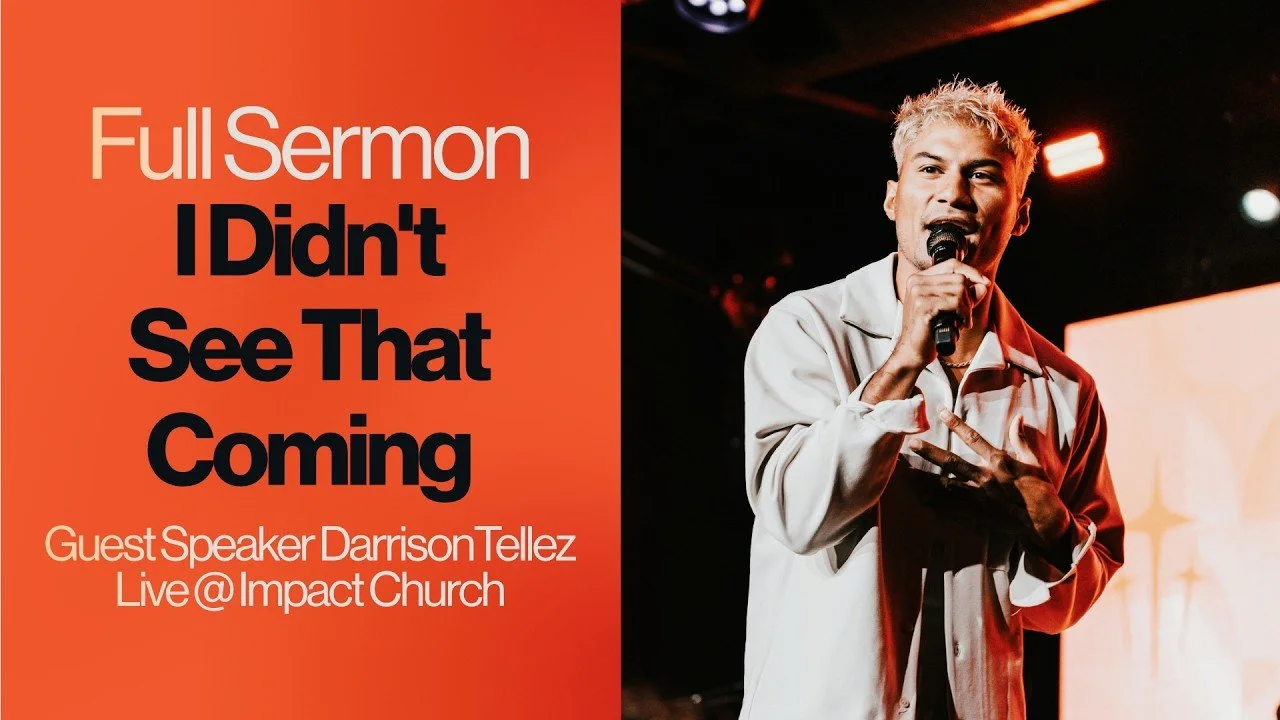
A pastor named Darison told his own version of this story during a recent message at Impact Church in Scottsdale, Arizona. He and his wife felt a clear calling to move their family from Arizona to Miami to plant a church. They planned it carefully: sticky notes on the wall, people committed to come alongside them, financial partners lined up. Then their feet hit the soil of Miami and the pillars started falling, one by one. A miscarriage. A house that wouldn't sell. Committed partners who backed out. Financial supporters who went silent.
He described standing in January of the following year, completely out of resources and ideas, and telling God: "I have nothing left to give." And in that moment, he said, something shifted. God's response, as he heard it, was not sympathy; it was honesty: "Your confidence was in the plan. Now I'm going to teach you how to put your confidence in me."
Proverbs 16 says that a person can make their own plans, but it is the Lord who determines the steps. God's plan versus my plan is not a competition where God cheats. It is a recalibration, one that often requires the old plan to fail before the real one can begin. Proverbs 3 adds this: the Lord will be your confidence and will keep your foot from being caught. But that promise only functions when God is the source of the confidence, not the plan itself.
The small, honest step you can take today: Write down what you have been trusting instead of God, whether that is the relationship, the income, or the outcome, and sit with the question of what it would mean to release that.
What God's Detours Are Actually Protecting You From
God's detours are not accidents. Just a few verses before the healing of the blind man, Jesus turns to his own disciples and asks them a pointed question: "Do you have eyes but fail to see?" He is not talking about physical sight. He is talking about spiritual vision, the capacity to perceive what God is actually doing beneath the surface of what is happening.
That question reframes the entire miracle. Jesus is not just healing a blind man's eyes. He is making a point to a group of followers who can see perfectly well with their physical eyes but are missing everything that matters. And the lesson lands like a diagnosis: blind is what you are before you meet God. Blurry is what you become when you get too comfortable with him.
Blurry faith is subtle. It does not feel like a crisis. It feels like maintenance. You show up, you go through the motions, you say the right things, but privately, nothing is resolving. You can see outlines, but you cannot find meaning in them. God's detours are most dangerous not when they produce doubt, but when they produce a quiet willingness to settle. You were in a drought long enough that the blurry version starts to look like the best God has to offer. And so you stop asking for the second touch.
The blind man in Mark 8 did something that takes real courage: when Jesus asked what he could see, he told the truth. He did not perform. He did not say what the crowd expected. He said, "I see people, but they look like trees." That honesty, that refusal to call the partial miracle the whole one, is what opened the door for Jesus to touch him again.
Philippians 1:6 promises that the one who began a good work in you will carry it to completion. God's detours are not detours away from that promise. They are the road that leads there.
The small, honest step you can take today: Ask yourself whether you have accepted a blurry version of something in your life and called it healed, and be honest about the answer.
What Mark 8 Teaches About Blind Faith, Blurry Faith, and Seeing Clearly
Mark 8:22–25 gives us the only two-stage healing miracle in the entire Bible. What does each stage represent, and what does the progression teach about trusting God when plans change? Here is how the miracle maps to real life:
1. Blind (Before the First Touch)
What it looks like: You cannot see God at all. You have not yet encountered him, or you have walked so far from him that the light feels completely gone.
What it means: Blindness, in the spiritual sense, is not a moral failure. It is a starting point. The blind man's friends did not shame him for being blind. They brought him to Jesus.
2. Blurry (Between the First and Second Touch)
What it looks like: You can see movement, but you cannot find meaning in it. Something is happening, you feel it, but you cannot make sense of whether it is God or coincidence or just noise.
What it means: This is the most dangerous stage, not because God is absent, but because blurry is just good enough to stop you from asking for more. The enemy's best strategy is not to keep you blind. It is to make you comfortable with partial sight.
3. Clear (After the Second Touch)
What it looks like: The text says the man saw everything clearly. Not mostly. Not better than before. Everything.
What it means: This is where process healing arrives. The second touch is not God fixing his mistake from the first touch. It is God completing what he always intended, after the man was honest enough to say he needed more.
Finding Your Footing When the Plan Falls Apart
If you have reached the end of a plan you were sure about and you are not sure what comes next, you do not have to sit with that alone. Impact Church exists for exactly that kind of moment: the honest one, where you show up not knowing what you actually see yet and ask God for the second touch. Whether you are in North Scottsdale, Tempe, Chandler, Gilbert, or anywhere across the greater Phoenix Valley and Maricopa County, there is a seat for you.
The Second Touch Is Still Available to You
You do not have to settle for blurry. God is not the God of halfway healed, and the same Jesus who touched a blind man twice in Mark 8 is the one Philippians 1:6 describes as finishing what he starts. Trusting God when plans change is not about pretending the detour is painless. It is about being honest, like the blind man was, about what you actually see, and staying present long enough for the second touch to come.
If you want someone to pray with you right now, take the next step here and submit a prayer request.
And if you are curious about what a Sunday at Impact Church looks like, plan your visit below, the door is open.
Frequently Asked Questions
-
The miracle in Mark 8:22–25 is the only recorded healing in all of Scripture that happened in two stages rather than one. It is not evidence that God is less willing to heal you; it is evidence that God sometimes chooses a process over an instant because something in the journey is part of what he is building. The speed of your healing does not measure how much God cares.
-
Start with honesty rather than performance. The blind man in Mark 8 told Jesus exactly what he saw, blurry figures that looked like walking trees, instead of pretending the miracle was complete. That kind of honesty, offered directly to God, is not a lack of faith. It is the act that opens the door for the next thing God wants to do.
-
That is worth sitting with honestly. Blurry faith, the kind where you can see outlines but not outcomes, movement but not meaning, is subtle. It does not feel like crisis. It feels like maintenance. If something in your life feels almost resolved, almost healed, almost right, and you have quietly stopped asking for the rest of it, you may be settling for less than what God intended.
-
The sermon draws on the story of a church planter who said God left out the cost of the calling on purpose, because had he known what the road ahead would look like, he never would have stepped into the vehicle that was going to drive him to his destination. God withholds details not to deceive but to protect the obedience that the plan requires.
-
Blind faith is where everyone starts. You simply cannot see God yet, and the longing is still active. Blurry faith is the more dangerous place: you have had an encounter, you have seen something, but you have settled into just enough of God to stop pursuing more. The risk of blurry faith is not that God is absent; it is that you stop asking for the second touch.
Leave us a comment to share your favorite takeaway from the sermon and be sure to share the message with someone you care about.
To support this ministry and help us continue to reach people all around the world, please visit our Giving page.