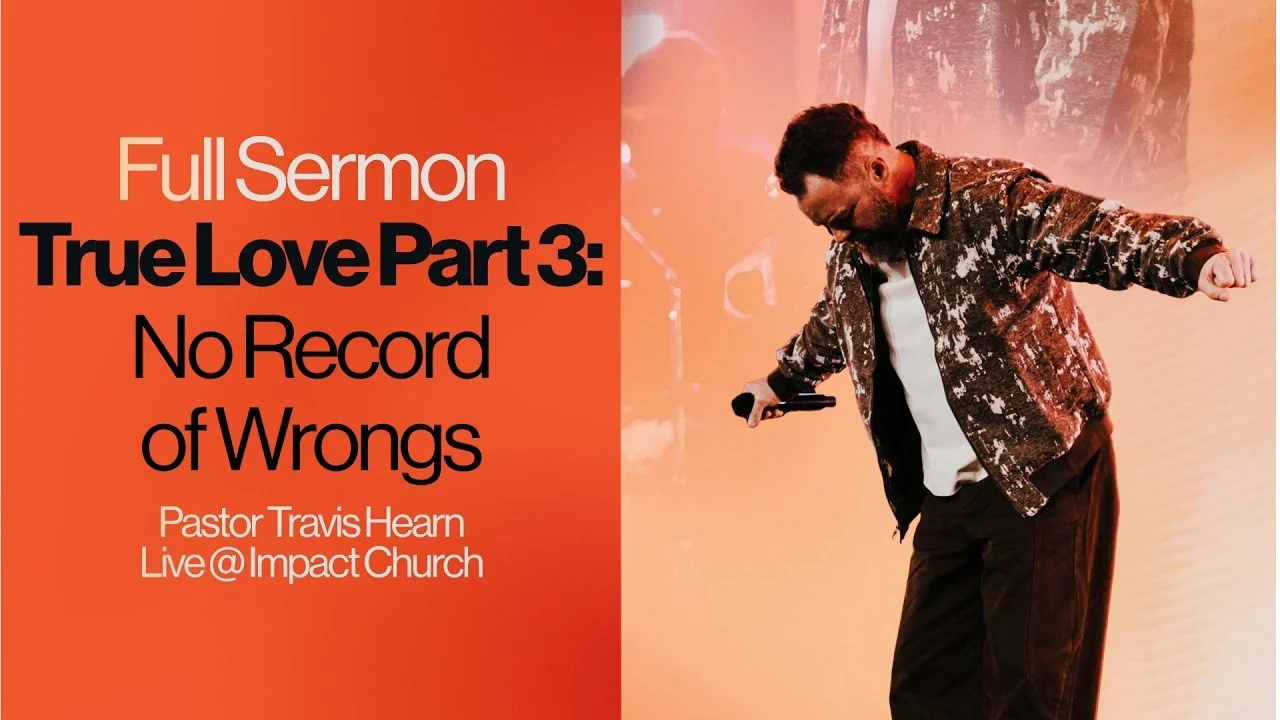
How to Forgive Someone Who Hurt You and Find Freedom
Knowing how to forgive someone who hurt you is one of the hardest things any person will face, especially when the wound is deep and the apology never came. Biblical forgiveness is not pretending it didn't happen or excusing what was done to you. It is a decision to stop collecting on the debt so that you can stop carrying the weight.
Most of us carry that weight longer than we realize. You've told yourself you moved on. You may have even said the words out loud. But then something small happens (a tone, a look, a familiar tension) and everything rushes back. If that describes where you are right now, you are not broken. You are human. And there is a way through.
Why Letting Go of Resentment Feels Impossible and What the Bible Says About It
Letting go of resentment is hard because resentment disguises itself as self-protection. You're not holding a grudge, you tell yourself; you're being careful. You're not keeping score; you're just remembering what happened so it doesn't happen again.
But the Apostle Paul, writing to the church in Corinth, used an accounting word when he said that love "keeps no record of wrongs" in 1 Corinthians 13:5. The Greek word he used means to log a debt, maintain a ledger, keep a running total. Every time you replay the wound, every time you store the offense for future reference, you are doing exactly what that word describes. You are building a file.
And the files compound. What started as one painful moment becomes a year of moments. A decade. You remember the date, the exact words, the tone of voice, the look on their face. You have receipts going back years, organized and ready. In every heated moment, you pull them out. That is not self-protection; that is leverage. And leverage, Pastor Travis Hearn of Impact Church in Scottsdale, Arizona explained, kills intimacy.
Letting go of resentment starts with recognizing that you're not protecting yourself; you're imprisoning yourself. The fence you built to keep the pain out has quietly become the thing keeping you in. One honest step today: ask yourself whether what you're holding is protecting you or trapping you. You don't have to answer out loud. Just stop long enough to look.
What Forgiveness in Marriage and Close Relationships Actually Requires
Forgiveness in marriage is where this teaching gets most personal (and most difficult) because the person who hurt you is still in your life. You share a home, a bed, a last name. You can't simply walk away from the wound, because you walk back into the same room as the person who caused it every single day.
Pastor Travis shared a story that stayed with many people. When he and his wife were dating in their twenties, he was in ministry with almost no income (about $163 a week) while she was earning well over $100,000 a year. When they went out to eat, she would quietly slip him her credit card under the table so he could pay, preserving his dignity in a way he hadn't asked for. When he'd acknowledge it the next time, she would simply say: I'm not keeping a record. Forgiveness in marriage looks like that — absorbing a cost without turning it into a debt.
The problem is that most of us do the opposite. We say we forgave. We mean it in the moment. But the next argument comes, and the files open again. What you called forgiveness was really a ceasefire. Colossians 3:13 says, "Forgive as the Lord forgave you" — completely, without strings, without a payment plan. That is the standard. It is an impossibly high standard by human effort alone.
Forgiveness in marriage doesn't mean ignoring patterns, tolerating abuse, or skipping accountability. It means releasing your grip on the right to make them pay for what they did. That is the distinction. One honest step today: the next time you feel the pull to bring up an old wound in a fresh argument, pause before you open the file.
Overcoming Bitterness Before It Becomes the Air in Your Relationship
Overcoming bitterness is urgent, not just spiritually but practically, because bitterness does not stay private. That is the thing about it. You think you're containing it. You think you're the only one who knows it's there. But overcoming bitterness begins with understanding what it's already doing to you and to the people closest to you.
Hebrews 12:15 calls it a "bitter root." A root is invisible at first. It does its damage underground. But eventually it breaks through the surface and, as the verse says, "causes trouble and defiles many." Bitterness leaks into your tone, your silence, your sarcasm. It makes you distant from someone you're physically present with. You're in the same house, sometimes the same conversation, but there's a wall. You talk, but it doesn't flow. You laugh, but it's careful.
Pastor Travis put it plainly: resentment feels powerful, but it is poison you swallow hoping someone else gets sick. Overcoming bitterness is not something you do for the person who hurt you. It is something you do because you deserve to be free. The other person has likely moved on. You are the one still carrying the weight. Every time you rehearse the offense, you relive the pain and give that moment more power over your present than it was ever supposed to have.
Proverbs 19:11 says, "It is to one's glory to overlook an offense." Overlooking is not blindness. You saw it clearly. You are choosing not to magnify it. That is not weakness; that is wisdom. Overcoming bitterness begins not with a breakthrough feeling but with a decision: I will not let yesterday's wound dictate today's intimacy.
One honest step today: identify one offense you have been mentally rehearsing this week and make a conscious decision not to give it airtime the next time it surfaces.
What Does 1 Corinthians 13 Say About Forgiveness, Grace, and True Love?
1 Corinthians 13:4–8 gives sixteen descriptions of what love is and what it is not. Love is patient. Love is kind. It does not envy or boast. It is not proud, self-seeking, or easily angered. And then: it keeps no record of wrongs. Love does not delight in evil but rejoices with the truth. It always protects, always trusts, always hopes, always perseveres. Love never fails.
These are not personality traits for especially gifted people. They are descriptions of covenant love, the kind that holds when the feelings don't. The kind that doesn't depend on the other person's behavior to determine its next move. The kind that, as Romans 5:8 says, moved first: "While we were still sinners, Christ died for us." Grace did not wait for you to clean yourself up. It moved toward you in the middle of your mess.
That is the model. And it reshapes the entire question of how to forgive someone who hurt you, because the standard is not "did they earn it?" The standard is "have you received it?"
Three Dimensions of Biblical Forgiveness
1. True Love Releases the Record
What it means: Releasing the record means choosing not to collect on the debt, not because what happened was acceptable, but because love does not operate like a courtroom.
What it looks like: You stop bringing up past offenses in current arguments. You stop storing receipts. You close the file.
2. True Love Moves First with Grace
What it means: Grace doesn't wait for an apology. In Matthew 18:21–22, Jesus told the Apostle Peter not to count how many times to forgive, because forgiveness isn't math; it's mercy.
What it looks like: You choose to release the leverage before the other person asks you to. Not because you feel like it, but because grace moved first for you.
3. True Love Forgives from the Heart
What it means: In Matthew 18:35, Jesus closes the parable with a warning. Forgiveness must come from the heart, not just from the mouth. You can say the words and still rehearse the offense.
What it looks like: Forgiveness from the heart means you stop replaying it, stop weaponizing it, and stop defining the person by their worst moment.
You Do Not Have to Carry This Alone
Carrying the weight of an unforgiven wound is exhausting, and no one should have to figure out how to put it down by themselves. If you are somewhere in the greater Phoenix Valley — whether that's North Scottsdale, South Scottsdale, Tempe, Paradise Valley, Chandler, or Gilbert — Impact Church is a place where this kind of honest, hard conversation happens every week. It is a community that does not ask you to have it together before you walk in, just to show up as you are.
Grace Kept No Record of You — You Can Do the Same
Forgiveness is not a feeling that arrives when you are finally ready. It is a decision you make before you feel ready, and the freedom follows. How to forgive someone who hurt you is not a mystery; it is a choice to stop collecting what grace already paid. You were forgiven completely, repeatedly, without a ledger. The same is available to you to give.
If you would like someone to pray with you about something specific, submit aprayer request here — our team would be honored to stand with you. If you are curious about what it looks like to take a next step in person, plan your visit below and come find a seat any Sunday.
Frequently Asked Questions
-
In 1 Corinthians 13:5, the Apostle Paul used a Greek accounting term meaning to log a debt or maintain a ledger. Love keeping no record of wrongs means choosing not to file away past offenses for future use as leverage. It is a decision to stop score-keeping in a relationship and release the debt rather than hold it.
-
Biblical forgiveness does not require an apology; it requires a decision. Romans 5:8 shows that God forgave while people were still in the wrong, before any repentance. Waiting for an apology before forgiving puts your healing in someone else's hands. Grace can move first even when the other person hasn't moved at all.
-
Start by recognizing that score-keeping feels like self-protection but functions as a wall. Each time you bring up a past offense in a current argument, you are choosing leverage over intimacy. The practical step is to notice when you're about to open an old file and decide not to, not because it doesn't matter, but because the relationship matters more.
-
No, and confusing the two keeps many people from doing either. Forgiveness is an internal decision one person can make alone, regardless of the other person's response. Reconciliation is the restoration of a relationship and requires both people, genuine repentance, and rebuilt trust over time. You can forgive someone fully without restoring access if the pattern of harm has not changed.
-
Hebrews 12:15 describes bitterness as a root that eventually surfaces and defiles many, meaning it never stays contained to the person you're bitter toward. It leaks into tone, body language, and emotional availability. Chronic unforgiveness is also linked to elevated stress and physical health consequences. Letting go of resentment is not just a spiritual practice; it is a choice for your own wellbeing.
Leave us a comment to share your favorite takeaway from the sermon and be sure to share the message with someone you care about.
To support this ministry and help us continue to reach people all around the world, please visit our Giving page.